DAVE TAYLOR'S WILDLIFE
  • About
  • Books
    • Predators of North America
  • eBooks on Amazon Kindle
    • Kindle Lifestories Series
    • Kindle To Be Seen or Not To Be Seen
  • SW YouTube Resources
    • SW YouTube Play Lists
    • Riverwood Mississauga Videos
    • Videos by Curriculum List
    • SW Videos by Curriculum
  • Wild Talks with Dave
    • Other Talks
    • Discovery Talks by Dave
    • Talks (Fee based)
    • Some Talks Delivered
  • Media
    • Blogs
    • Photos >
      • Nature Photography Resources
      • Africa
      • Europe
      • North America
      • South America
      • Australia
    • Illustrations
    • Videos >
      • North American Videos
      • Africa Videos
  • Black Bears A Natural History
    • Black Bears Behind the Scenes
    • Black Bears I Have Known >
      • Rosie: Mother of Generations
      • Floppy
      • Ontario's Bears
      • Behind The Image
    • Black Bears: Book Orders
  • Education Support
    • Turtles >
      • Turtle Questions
      • Turtle Answers
      • Turtle Resources
      • Midland Painted Turtle
      • Red-eared Slider
      • Common Snapping Turtle
    • Media Literacy
    • Types of Videos
    • Talks and Visits
    • Questions for Elementary Curriculum >
      • Questions About Wildlife
      • Questions for Grades 1-3
      • Questions for Grades 4-6
      • Questions for Grades 7-8
      • Questions: Birds Nesting
      • Questions: Bird Behaviour
      • Birds at a Feeder Questions
    • Notes on Answers >
      • Answers
      • Answers to Grade 1-3 Questions
      • Answers to Grade 4-6 Questions
      • Answers to Intermediate Questions
      • Notes on Salmon
      • Answers to "Bird's Nests"
      • Birds at a Feeder Answers
      • Bird Feeder Resources
      • Answers About Wildlife
  • Contact
  • Birds and Birding
    • Raptors
  • Blog
    • Safari 2024 Letter
  • Safari 2024 Trip Websites

Red Squirrel

The Red Squirrel
 
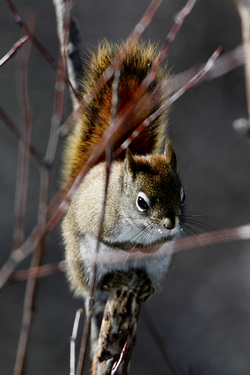
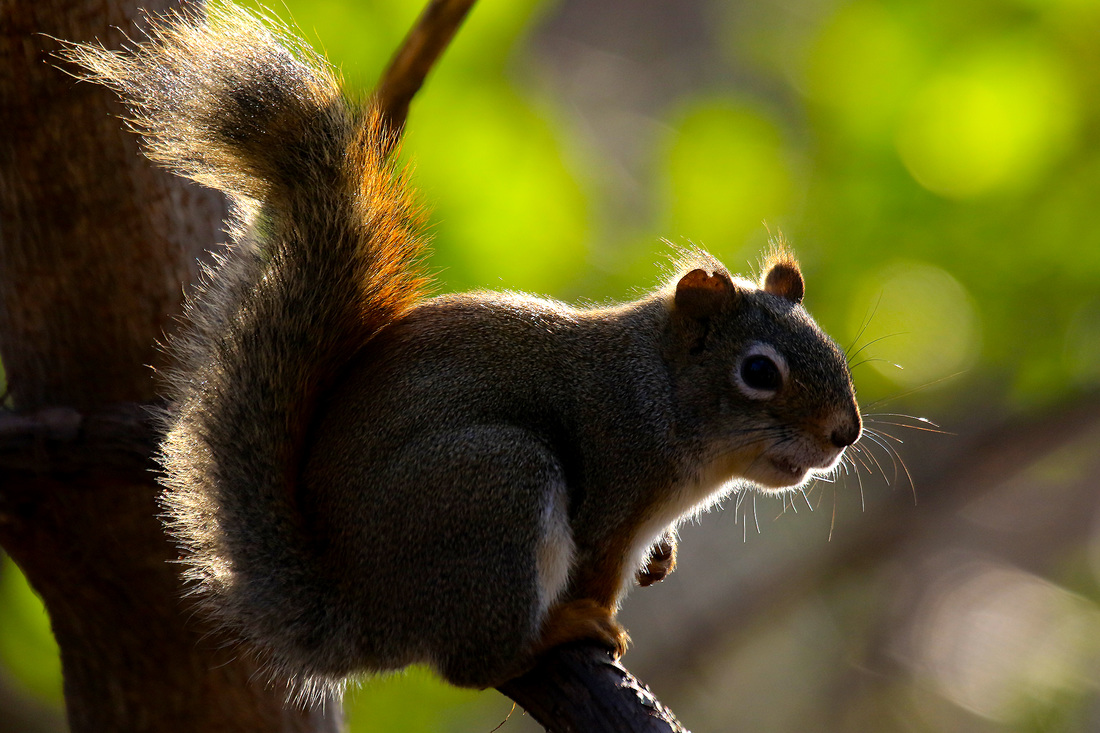
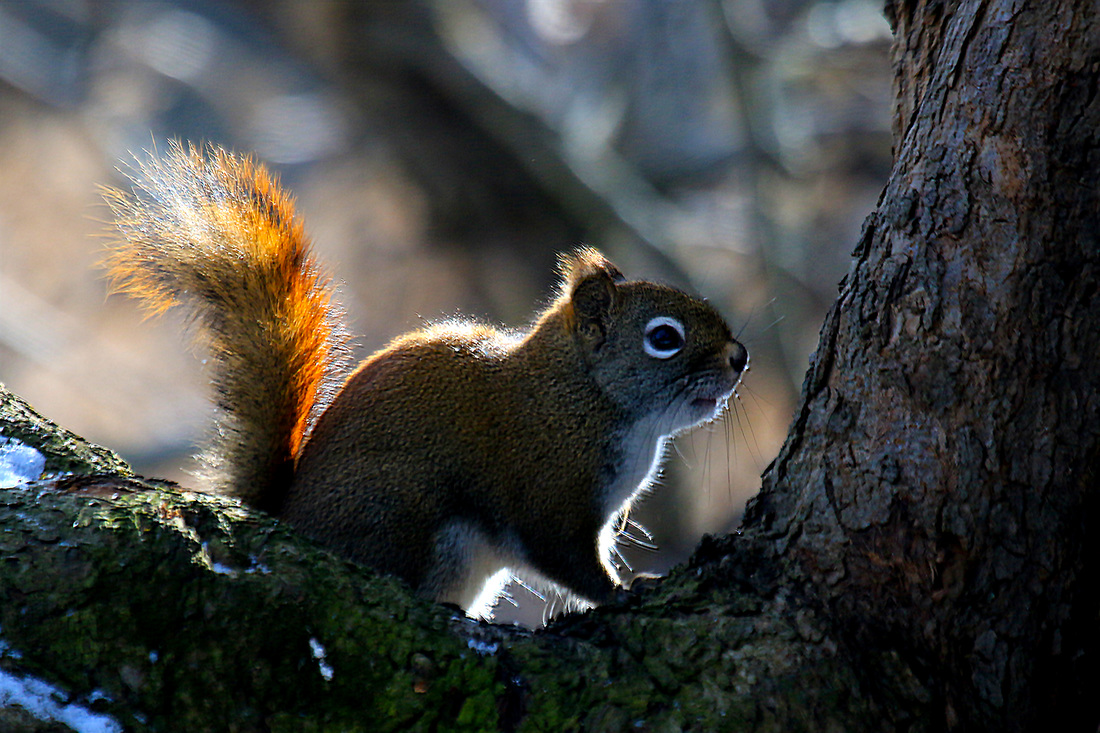
The Red squirrel is heard more often that it is seen by anglers. It’s preferred habitat has to have pine trees or other conifers and in places where there is a combination of good fishing waters and these trees this squirrel will likely be encountered.
 
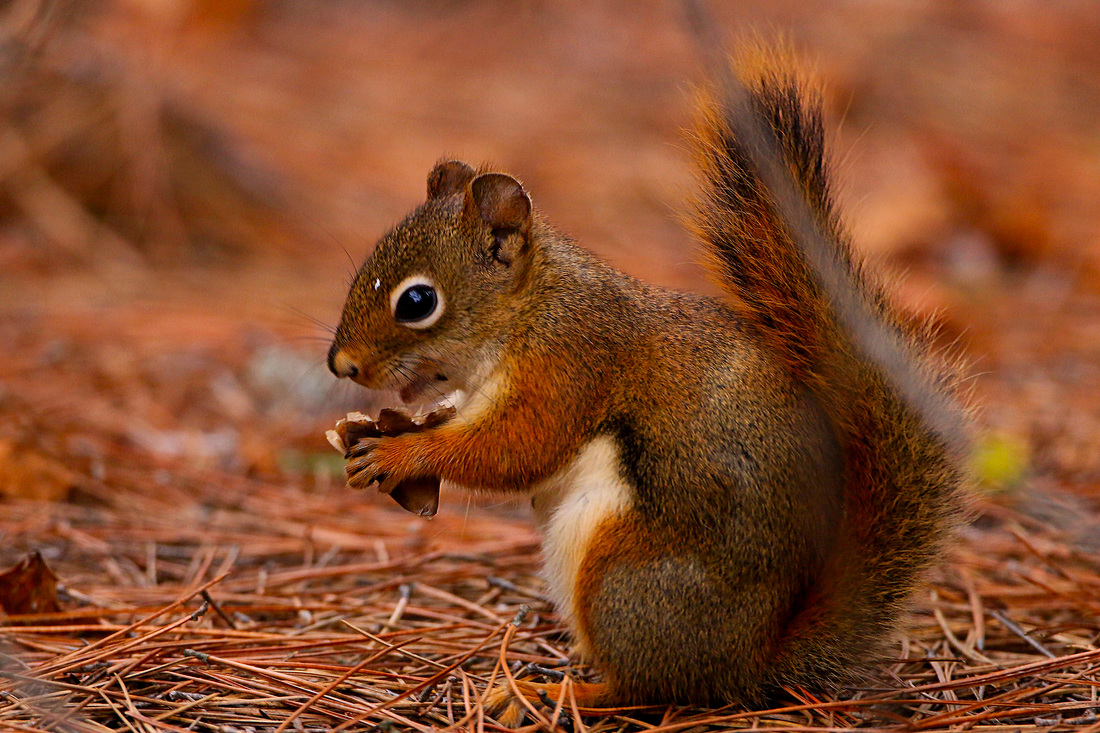
The Red squirrel is the smallest of our tree squirrels. For example it weighs only about half of what the grey squirrel weighs, a mere 140 to 300 grams (5 to 11 oz.).  Surprisingly it often succeeds in driving off its larger relative when the two species meet at a bird feeder. Red squirrels are known to be very aggressive and will also chase off gray jays, blue jays and other red squirrels.
 
They will confront their main night-time predator, Great Horned owls and harass them during the day with their loud, angry chirping until the owl flies off to quieter retreat. Gray squirrels make a deeper, grunting sound when they are alarmed. (Skilled squirrel hunters can reproduce this sound by striking two stones together but the red squirrels long chirr is much more difficult to replicate.)
 
Black bears (and out west, grizzlies) are, if not a direct threat, a major annoyance. Red squirrels cache their horde of seeds that may contain upwards to 50 litres (over a bushel) of pine nuts. There may be several such middens in the squirrel’s territory and each pile of seeds is jealously guarded against interlopers. Bears seek out these middens and will ravenously consume the high protein nuts and there is little the tiny squirrel can do except voice it’s anger.
 
Red squirrels also eat mushrooms, acorns, berries, birch and aspen buds, maple sap and even bark. They are also predators of a sort and will eat insects, bird’s eggs and nestlings. They will even eat carrion. However, animal matter makes up just a small part of their diet. 
 
Found all across Canada and the Northern USA wherever there are suitable stands of pine trees, the red squirrel is replaced on the western coast by a close relative; the Douglas tree squirrel. This squirrel has almost greeny-gray look to it rather than the red coat that gave our more widely ranging squirrel its name.
 
Red squirrels nest in holes in trees (often made by woodpeckers) or nest’s made of leaves, twigs and barks called a “dray”. Nests are lined with shredded vegetation for insulation. They may also use an abandoned burrow.
 
In these nests the female gives birth to between 3 and 7 babies. Most will not survive their first year but a few lucky ones may live to be nearly 7 years old. There is no shortage of predators; owls, hawks, coyotes, foxes, weasels, fishers, bobcats and lynx will all dine on them. The marten
is its most dangerous enemy. Unlike the other predators, martens seemed to be virtually designed to hunt red squirrels. They are agile tree climbers, small enough to enter the squirrel’s drays and can keep pace with the squirrel as it flees from branch to branch.
 
The call of this tiny squirrel is a familiar one to anyone who enters its habitat. Next time you hear it give it a listen and try figure out what may have set it off this time.
​
​
​​Note: A version of this article first appeared in Bob Izumi's Real Fishing Magazine in
​Dave's column At the Water's Edge. It is used with the permission of editor.
Picture

All images  and text are copyright © 2016 J.D. Taylor Senses of Wildness Inc. These images may not be used in any form without permission. All rights reserved.
© COPYRIGHT 2015. ALL RIGHTS RESERVED.
  • About
  • Books
    • Predators of North America
  • eBooks on Amazon Kindle
    • Kindle Lifestories Series
    • Kindle To Be Seen or Not To Be Seen
  • SW YouTube Resources
    • SW YouTube Play Lists
    • Riverwood Mississauga Videos
    • Videos by Curriculum List
    • SW Videos by Curriculum
  • Wild Talks with Dave
    • Other Talks
    • Discovery Talks by Dave
    • Talks (Fee based)
    • Some Talks Delivered
  • Media
    • Blogs
    • Photos >
      • Nature Photography Resources
      • Africa
      • Europe
      • North America
      • South America
      • Australia
    • Illustrations
    • Videos >
      • North American Videos
      • Africa Videos
  • Black Bears A Natural History
    • Black Bears Behind the Scenes
    • Black Bears I Have Known >
      • Rosie: Mother of Generations
      • Floppy
      • Ontario's Bears
      • Behind The Image
    • Black Bears: Book Orders
  • Education Support
    • Turtles >
      • Turtle Questions
      • Turtle Answers
      • Turtle Resources
      • Midland Painted Turtle
      • Red-eared Slider
      • Common Snapping Turtle
    • Media Literacy
    • Types of Videos
    • Talks and Visits
    • Questions for Elementary Curriculum >
      • Questions About Wildlife
      • Questions for Grades 1-3
      • Questions for Grades 4-6
      • Questions for Grades 7-8
      • Questions: Birds Nesting
      • Questions: Bird Behaviour
      • Birds at a Feeder Questions
    • Notes on Answers >
      • Answers
      • Answers to Grade 1-3 Questions
      • Answers to Grade 4-6 Questions
      • Answers to Intermediate Questions
      • Notes on Salmon
      • Answers to "Bird's Nests"
      • Birds at a Feeder Answers
      • Bird Feeder Resources
      • Answers About Wildlife
  • Contact
  • Birds and Birding
    • Raptors
  • Blog
    • Safari 2024 Letter
  • Safari 2024 Trip Websites