Snowy OwlThe Snowy Owl (Bubo scandiacus)
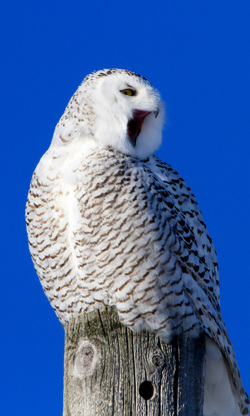
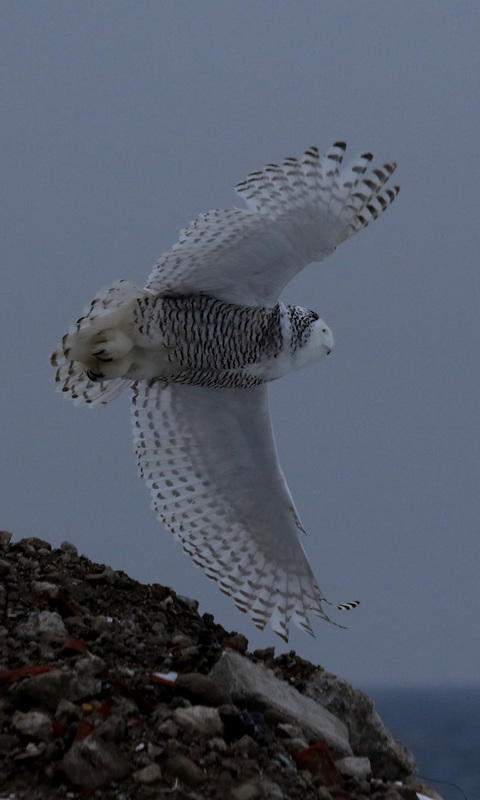
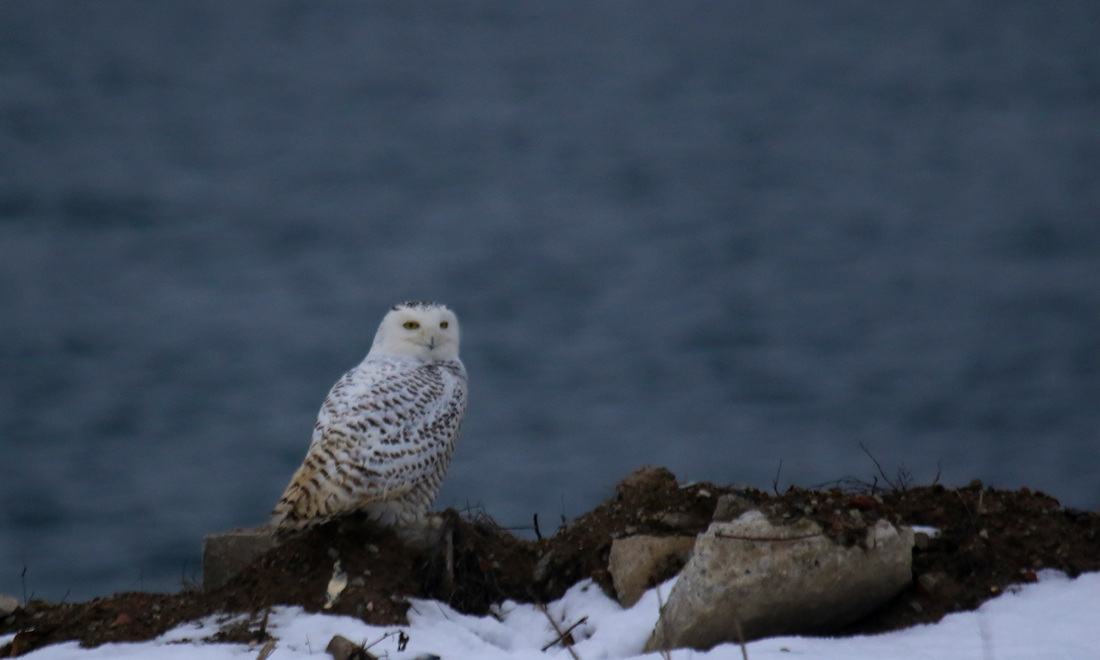
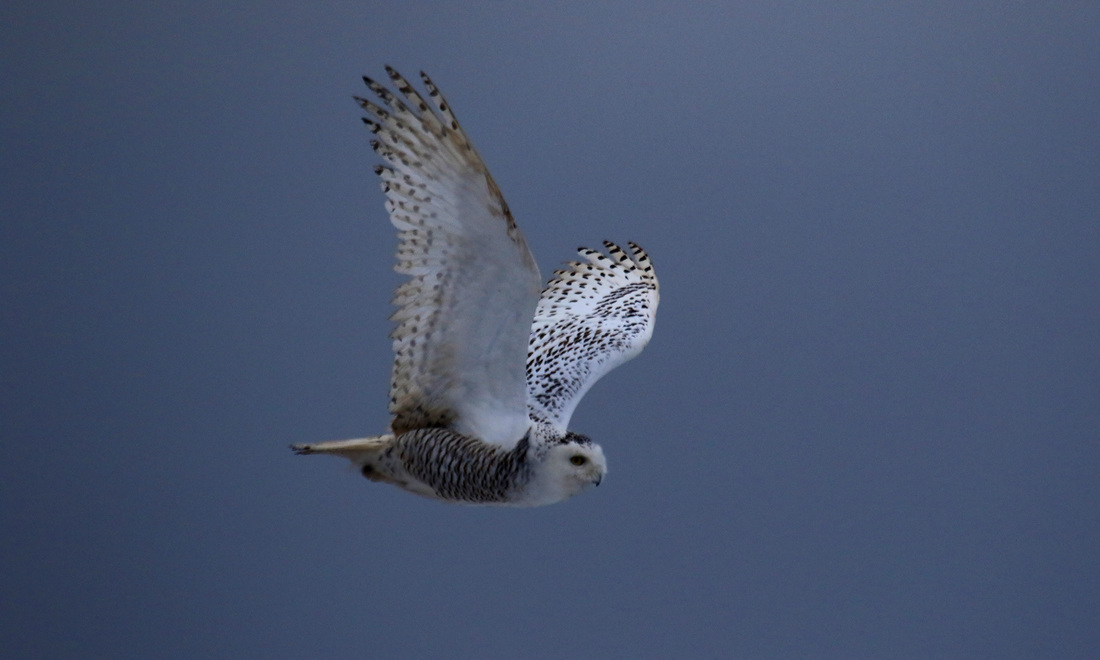
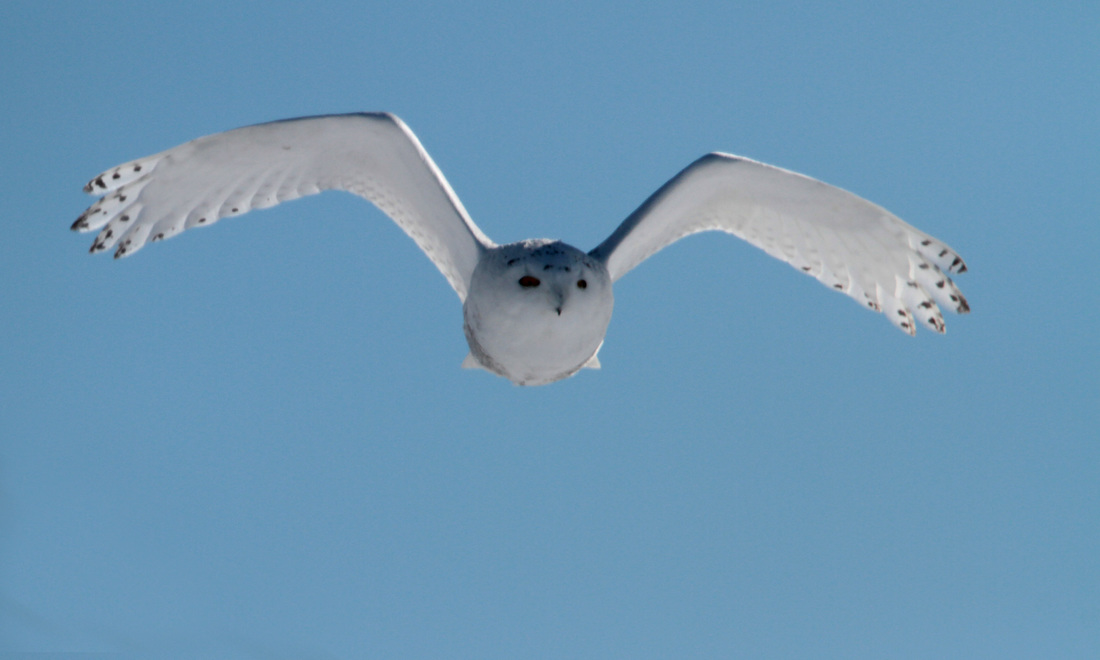
Every fall they appear across Southern Canada and into the Northern United States. Late season photographers might see one fly over or see one sitting on a fence post on their way to a favourite birding spot. In the fall they are easy spot; a large white bird against a backdrop of browns and greys. Snowy owls have arrived. The technical term for this is “irruption”. Snowy owls live and breed in the Northern Hemisphere’s tundra areas. They are circumpolar birds found in North America, Europe and Asia. Their appearance well over a 1000 kilometer south of their home range is a regular event however. Most biologists believe it is a result of the owl’s natural prey becoming harder to find either due to increased snow cover or cyclical population declines. Some years there are a lot of these owls around. Some years see very few but there are always sightings. Many of the birds are young of the year, easily distinguished by their dark chests and heads. Their faces are always white. As they mature male snowy owls become whiter. Females always retain the darker bars over their body but they too lighten in colour compared to younger birds. Females are also larger than males (f: length 24-28 inches/ 60-70 cm m: length 22-25 inches/ 55-64 cm). They are also slightly heavier. In their circumpolar range they feed on small rodents (lemmings, voles), arctic hare, waterfowl, and ptarmigan and song birds. Their prey selection changes only slightly when they arrive in the south. Now meadow voles, cottontail rabbits, other small mammals and whatever birds maybe available. Along the shores of Lake Ontario I’ve watched them hunt long-tailed ducks. The owls perch on the shore and then swoop out over the flock of feeding ducks. The ducks see the owl coming and dive but the owl has a strategy. It loops and returns quickly over where the ducks are likely to come up for air surprising their victim. It is not 100% successful by any means but I’ve seen enough frozen duck carcasses along the shore to attest that the technique does work. Many years ago I had my strangest encounter with a snowy owl. A friend and I were bird watching by Toronto’s Humber Bay when a ring-billed gull landed at our feet. It was squawking and making a terrible fuss but it was unharmed. Then we looked up and hovering just over us was a snowy owl. It was too afraid of us to make the kill but not so afraid that it was going to give up without a good try. It flew off a short while later and so did the gull. We never knew if the owl was successful. These owls are not that wary around people. They are often seen sitting on roof tops in the middle of cities (feeding on pigeons and squirrels perhaps?) and are quite common along the shores of the Great Lakes as long as there are ducks about. They also like farmer’s fields that attract rodents and waterfowl. Snowy owls are ground nesters. The migrants are usually gone back north before the end of winter. Once back on the tundra the females select a flood-resistant site on a rise. Wind swept locations are preferred as the wind helps rid the nest site it biting insects. The clutch size ranges from 3 to 12 eggs. The number of eggs depends on the availability of prey. After about a month the first eggs hatch and two to three weeks later the surviving young are walking about on the tundra. (Owlet survival is dependent on both parents capturing enough food to feed their young.) Arctic foxes, peregrine falcons and other predators also take their toll as do mosquitoes whose feeding can weaken the young birds. In years in which a lot of the young survive we can look forward to a major irruption of these birds in the fall. Note: A version of this article first appeared in Bob Izumi's Real Fishing Magazine in Dave's column At the Water's Edge. It is used with the permission of editor. |
|


All images and text are copyright © 2016 J.D. Taylor Senses of Wildness Inc. These images may not be used in any form without permission. All rights reserved.